
Stamped & Decorative
 Stamped & Decorative
Stamped & Decorative Concrete
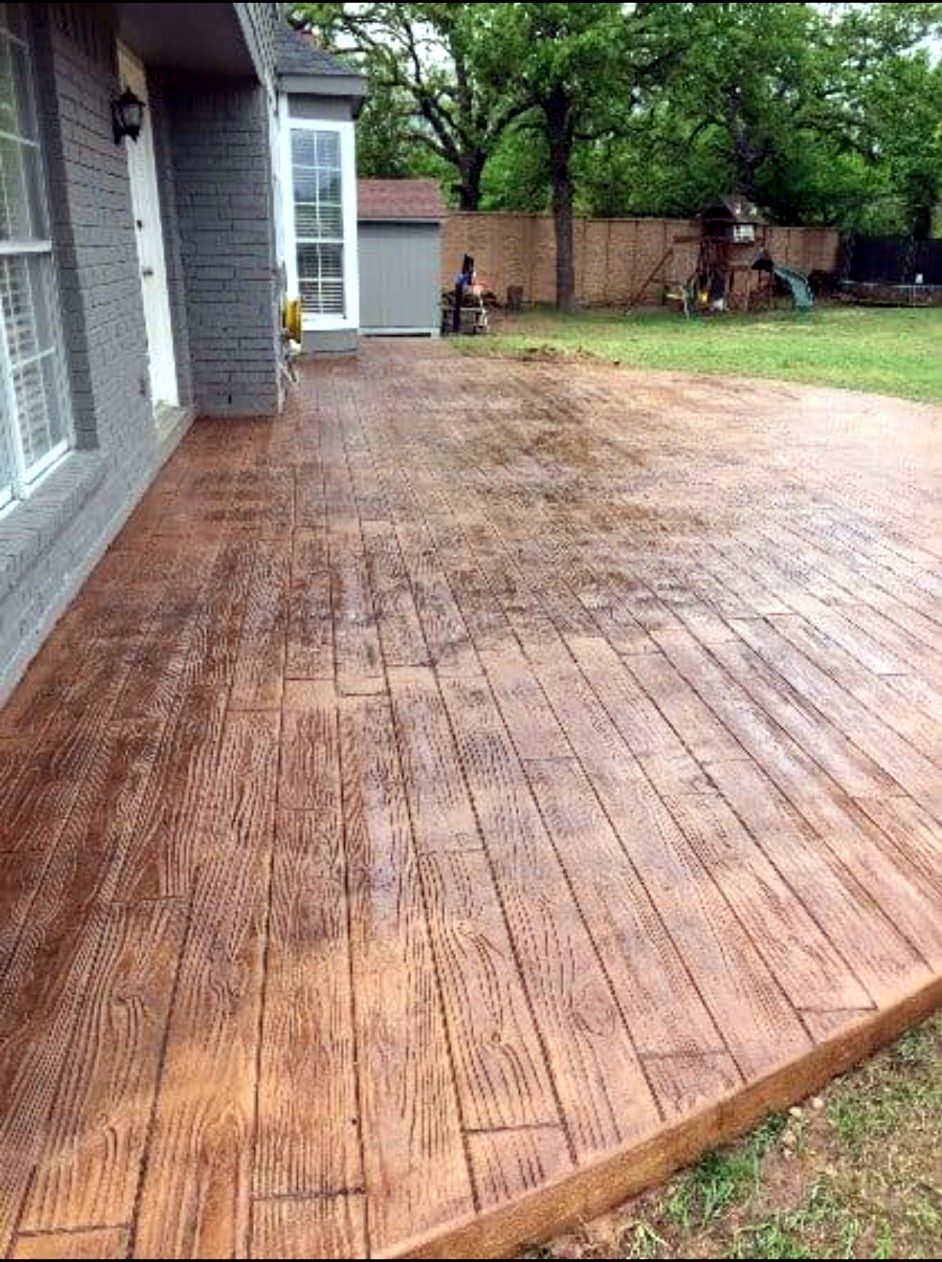
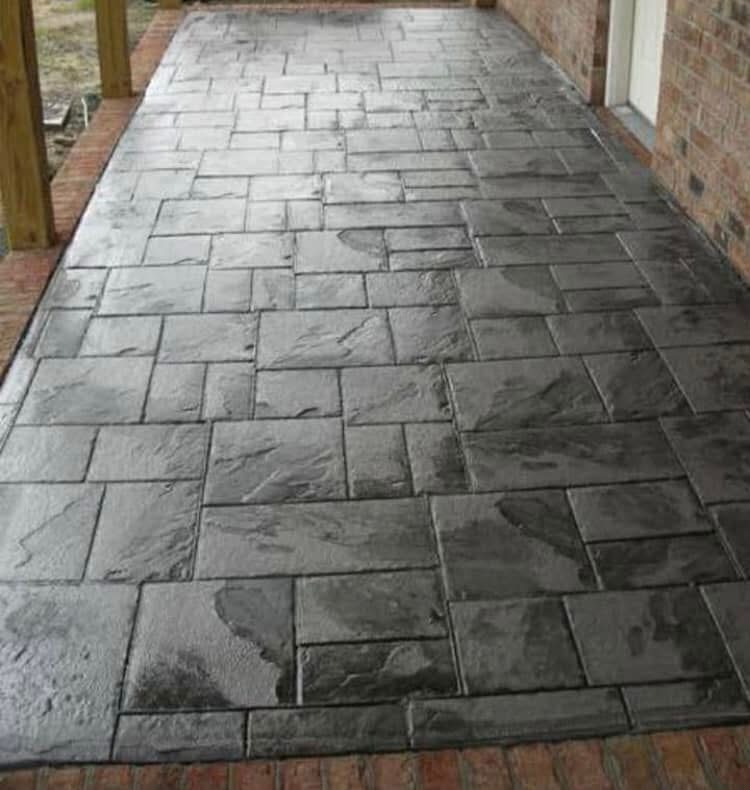
Stamped concrete is a standard poured slab that is textured and colored while it is still workable, so you get the look of stone, slate, or brick in one continuous surface — with far fewer joints for weeds and settling than pavers.
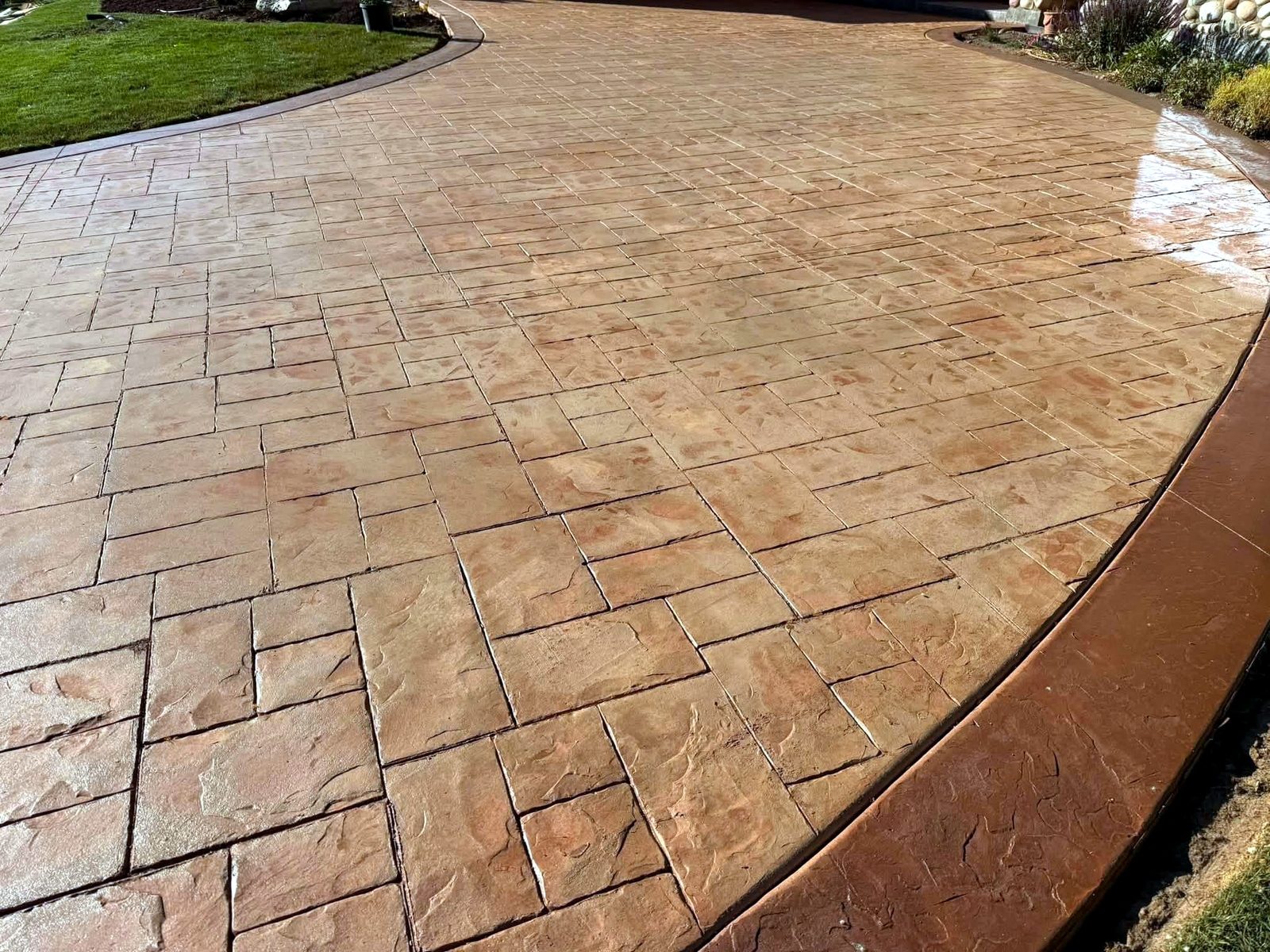
What stamped concrete is
Stamped concrete starts as an ordinary reinforced slab. Color is added either through the mix or as a hardener worked into the surface, a release agent is applied, and textured mats are pressed into the concrete during a narrow window while it is still plastic. Once it cures, the pattern is part of the slab, not a coating sitting on top of it.
Because the surface is monolithic, there are no hundreds of individual units to lift, rock, or grow weeds between the way a paver field does over time.
Where homeowners use it
- Rear patios and outdoor living areas that need to look finished, not utilitarian
- Front walkways and entries where curb appeal matters most
- Pool surrounds, using textures that keep grip with wet feet
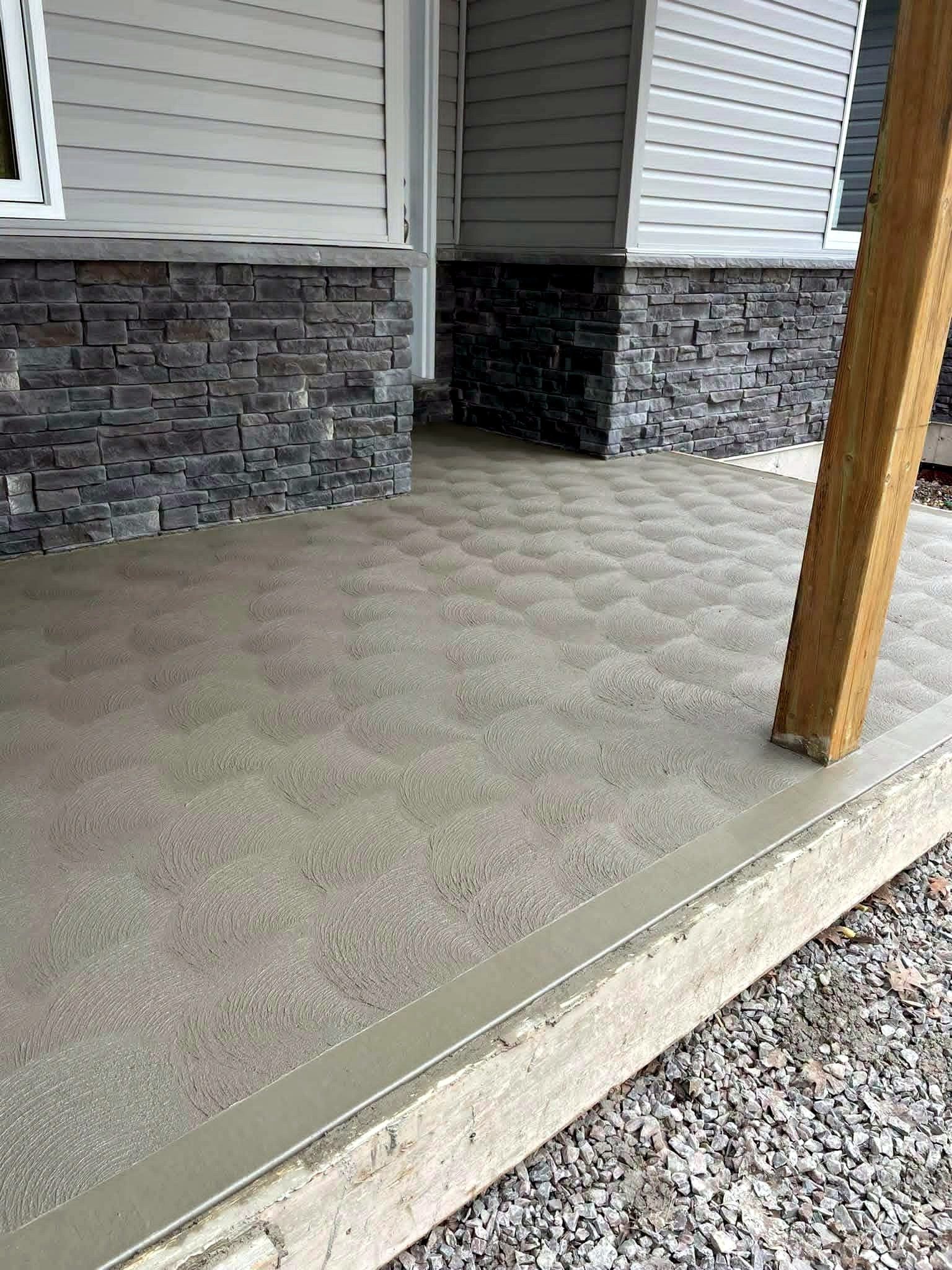
- Decorative borders and bands framing a broom-finished field
- Small commercial entrances and courtyard areas
Site preparation
Stamped work demands the same base discipline as any slab: excavation to depth, a graded and compacted stone base, correct reinforcement, and pitch established before forming. A beautiful pattern on a poorly prepared base still cracks and settles.
Timing matters more here than on a plain pour, so we plan crew size and pour scheduling around the weather. Stamping too early or too late in the set is what produces shallow, muddy-looking texture.
Pattern, color, and finish options
We review pattern and color options with you before pour day, so you are choosing from real samples rather than approving something after it is permanent.
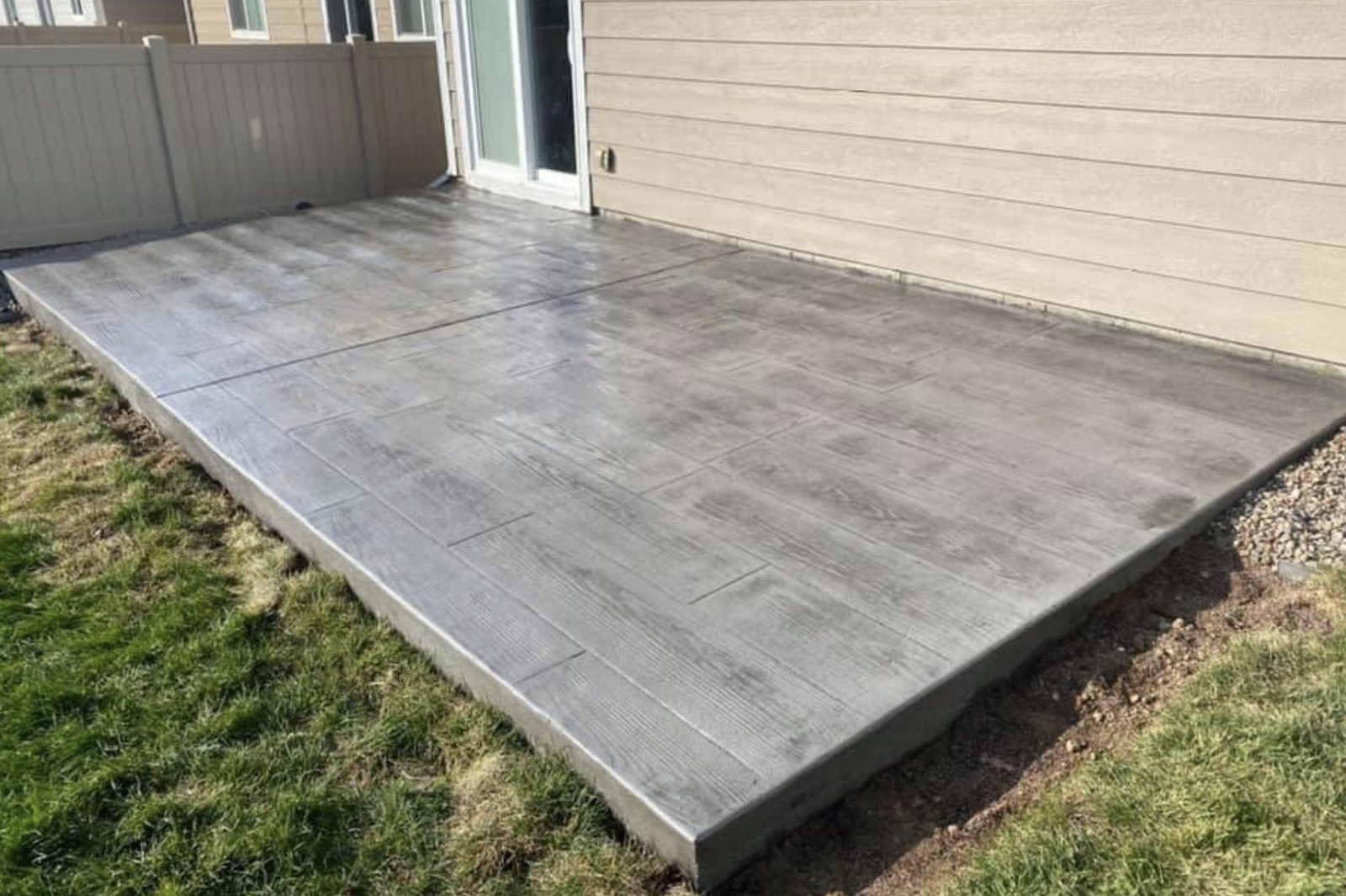
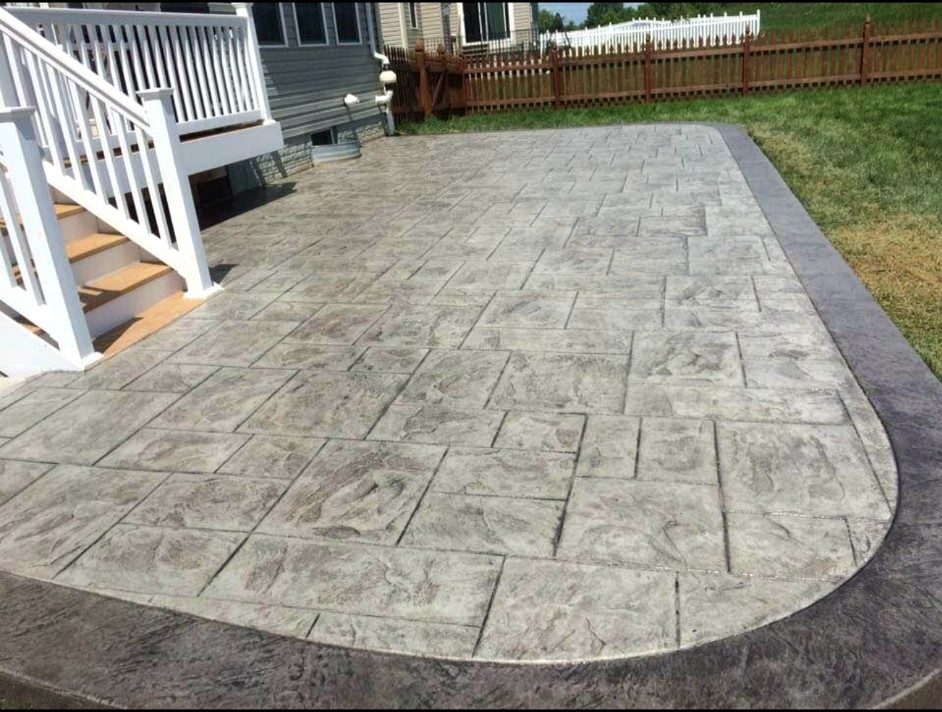
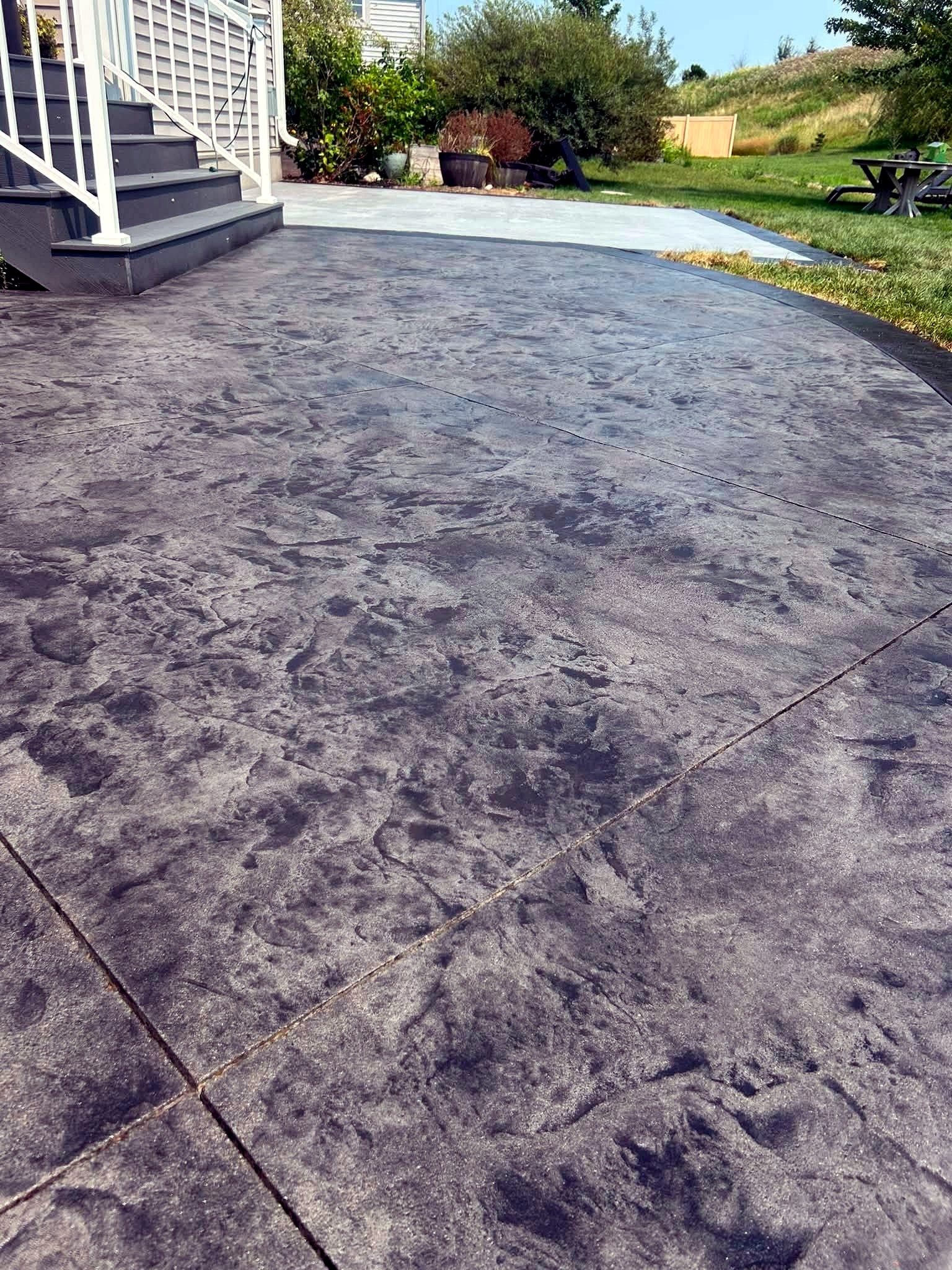
- Patterns such as ashlar slate, random stone, seamless texture, and running-bond brick
- Base color plus a contrasting release for depth rather than a flat, painted look
- Borders and soldier courses that frame the field and define edges
- Sealer choices from matte to higher sheen, which also affects how wet the surface feels
Drainage and grading
Stamped texture creates low points in the surface, which makes proper pitch even more important. We set slope so water sheds off the slab and away from the house instead of collecting in the pattern's valleys and freezing there in winter.
Timeline factors
Stamped projects take longer than a plain pour because the stamping window is short and the work is hands-on. Square footage, pattern complexity, demolition, and access all affect the schedule, and cool or wet weather can push a pour date.
Maintenance and common causes of failure
- Re-seal periodically; the interval depends on sun exposure, traffic, and the sealer used
- Rinse the surface and clear debris out of the texture so staining does not set
- Avoid de-icing salts, which attack both the sealer and the surface
- Most failures come from a weak base, missing control joints, stamping outside the correct window, or a sealer applied over trapped moisture, which clouds the finish
Why our process matters
Stamping is a timing job. We staff it so the crew can texture the whole area within the window, and we set the joint layout before the pattern goes down so joints fall where they belong in the design instead of cutting awkwardly across it.
Questions worth asking before you hire
- Will the color be integral to the mix, a surface hardener, or both?
- How will control joints be laid out so they work with the pattern?
- What sealer is being used, and how often should it be reapplied?
- How large is the crew, and can they stamp the whole area within the working window?
- Can I see finished work in this pattern and color combination?
We answer all of these during the on-site visit. Read more about our family-owned crew or request a free concrete estimate.
What to Expect
How we approach this work
Pattern & Color Chosen Up Front
We review stamp patterns and color options together so there are no surprises on pour day.
One Continuous Surface
Fewer joints than pavers, which means fewer places for weeds, settling, and shifting.
Textured, Not Slick
The stamped texture and finish keep the surface usable underfoot in wet weather.
Sealed for Longevity
A sealer protects the color and makes the surface easier to rinse clean.
Related Services
Other work we do
Patios
Poured concrete patios sized and finished for how you actually use the yard.
Concrete patios and front steps →Pool Decks
Slip-resistant pool surrounds shaped to the pool and drained properly.
Concrete pool decks →Driveways
Properly based, jointed driveways built to carry daily vehicle traffic.
Concrete driveways and sidewalks →
Free Estimate
Tell us about your project
Send a few details and we'll schedule an on-site visit at no cost. Prefer to talk it through? Call us directly.